
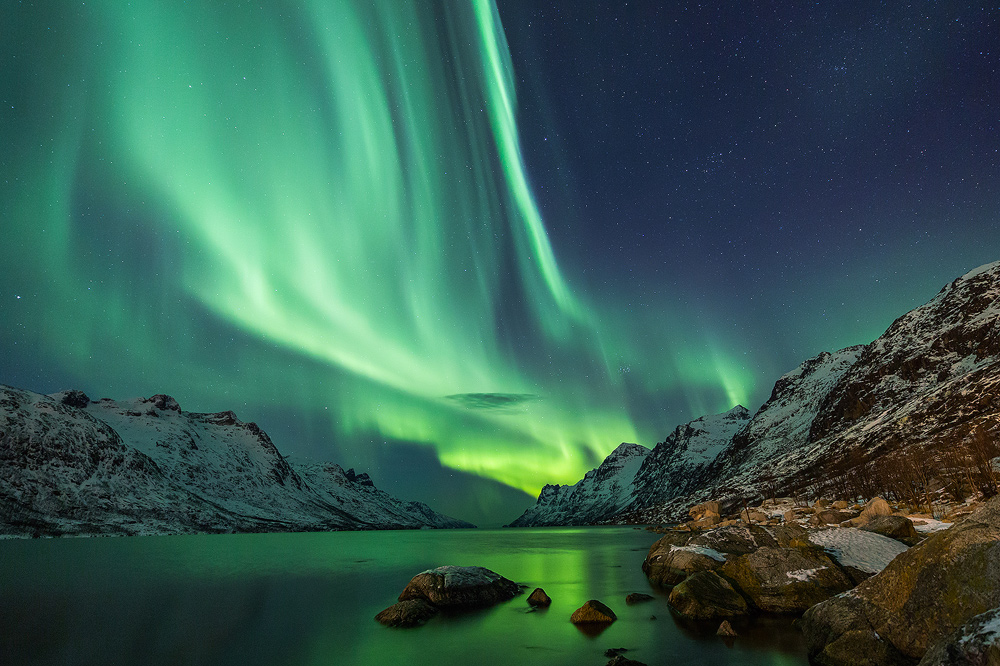

The night sky above Earth’s southernmost continent is often a canvas for one of nature’s most breathtaking spectacles: the Aurora Australis. Far from the bustling cities and light pollution, the pristine darkness of Antarctica offers an unparalleled view of this celestial ballet. While its northern counterpart, the Aurora Borealis, often grabs headlines, the Southern Lights are equally mesmerizing, painting the polar skies with vibrant hues of green, pink, and purple. For those captivated by the mysteries of the polar regions and seeking the latest antarctic news, understanding this phenomenon offers a deeper appreciation for the wonders that unfold at the ends of our Earth.
What Causes the Southern Lights? A Symphony of Solar Wind and Magnetism
At its core, the Aurora Australis is a grand cosmic interaction between our Sun and Earth’s magnetic field. It all begins with the Sun emitting a constant stream of charged particles known as the solar wind. During periods of increased solar activity, such as solar flares or coronal mass ejections (CMEs), the Sun can unleash even more powerful bursts of these particles.
As these high-energy electrons and protons travel through space, they eventually encounter Earth’s magnetosphere – a protective bubble generated by our planet’s molten iron core. Most of these particles are deflected, but some are channeled towards the magnetic poles. When these charged particles collide with atoms and molecules in Earth’s upper atmosphere (primarily oxygen and nitrogen) at altitudes typically between 60 and 300 miles, they excite these atmospheric gases. As the excited atoms return to their original, lower energy state, they release photons of light, creating the spectacular glow we know as the aurora.
The specific colors observed depend on the type of gas being excited and the altitude at which the collision occurs:
- Green: The most common auroral color, produced by oxygen atoms at lower altitudes (around 60-150 miles).
- Red: Less common but stunning, resulting from oxygen atoms at higher altitudes (above 150 miles).
- Blue/Violet/Pink: Produced by nitrogen molecules, often seen at the lower edge of auroral displays.
Where and When to Witness This Antarctic Spectacle
While the Aurora Australis can theoretically be seen from any location within the auroral oval – a ring-shaped region around the magnetic pole – Antarctica offers some of the most consistent and spectacular viewing opportunities. Research stations like the Amundsen-Scott South Pole Station, Scott Base, and McMurdo Station frequently report stunning displays. Expedition cruises sailing through the Southern Ocean also often provide passengers with unforgettable views.
The best time to witness the Aurora Australis is during the long, dark winter months in Antarctica, typically from March to September. During this period, the continent experiences prolonged periods of darkness, maximizing the chances of spotting the lights. However, even during other times of the year, strong solar storms can trigger displays visible for shorter durations. Clear, moonless nights away from any artificial light sources are ideal for optimal viewing.
Scientific Insights and Ongoing Research
The Aurora Australis is more than just a beautiful light show; it’s a valuable window into space weather and Earth’s magnetic field. Scientists in Antarctica continuously monitor auroral activity using specialized cameras, magnetometers, and radar systems. This data helps us understand the complex interactions between the Sun and Earth, which can have practical implications for satellite communications, power grids, and even astronaut safety.
Recent antarctic news has highlighted advancements in auroral research, with new imaging techniques revealing intricate structures within the aurora that were previously unseen. For instance, observations have shown “dunes” or wave-like patterns within auroral arcs, offering clues about atmospheric gravity waves and their impact on the upper atmosphere. Studying these phenomena helps refine our models of space weather and contributes to a broader understanding of planetary magnetospheres throughout the solar system.
Tips for Observing the Aurora Australis (If You’re Lucky Enough to Be There)
For the fortunate few who find themselves in the Antarctic during an auroral display, here are some tips to enhance your experience:
- Seek Darkness: Move as far away from artificial lights as possible. Even faint light pollution can diminish the aurora’s visibility.
- Look Up: Find an unobstructed view of the sky.
- Dress Warmly: Antarctic nights are brutally cold. Layer up, wear insulated boots, gloves, and a hat to stay comfortable.
- Be Patient: Auroral displays can be unpredictable. They might start subtly and grow in intensity, or appear suddenly.
- Photography: A DSLR or mirrorless camera with a wide-angle lens and manual settings is ideal. Use a tripod, set a high ISO (1600-6400), a wide aperture (f/2.8 or lower), and an exposure time of 10-30 seconds.
Conclusion: A Testament to Earth’s Dynamic Nature
The Aurora Australis stands as a powerful reminder of the invisible forces at play between our Sun and Earth. It’s a natural phenomenon that captivates and inspires, drawing scientists and adventurers alike to the remote corners of our planet. From the intricate physics of solar wind interaction to the ethereal beauty it paints across the polar sky, the Southern Lights are a testament to the dynamic and interconnected nature of our solar system. As long as there is solar activity and a magnetic field to guide its charged particles, this spectacular light show will continue to grace the Antarctic heavens, offering a profound experience for all who are privileged enough to witness it and a constant source of wonder in antarctic news.
Author Bio: An avid explorer of natural phenomena and a keen observer of Earth’s most extreme environments, the author specializes in communicating complex scientific concepts in an accessible and engaging manner. With a background in environmental science and a passion for polar regions, they strive to highlight the beauty and importance of our planet’s delicate ecosystems and the wonders they hold. Their work often focuses on the intersection of geology, climate, and celestial events that shape our world.
