
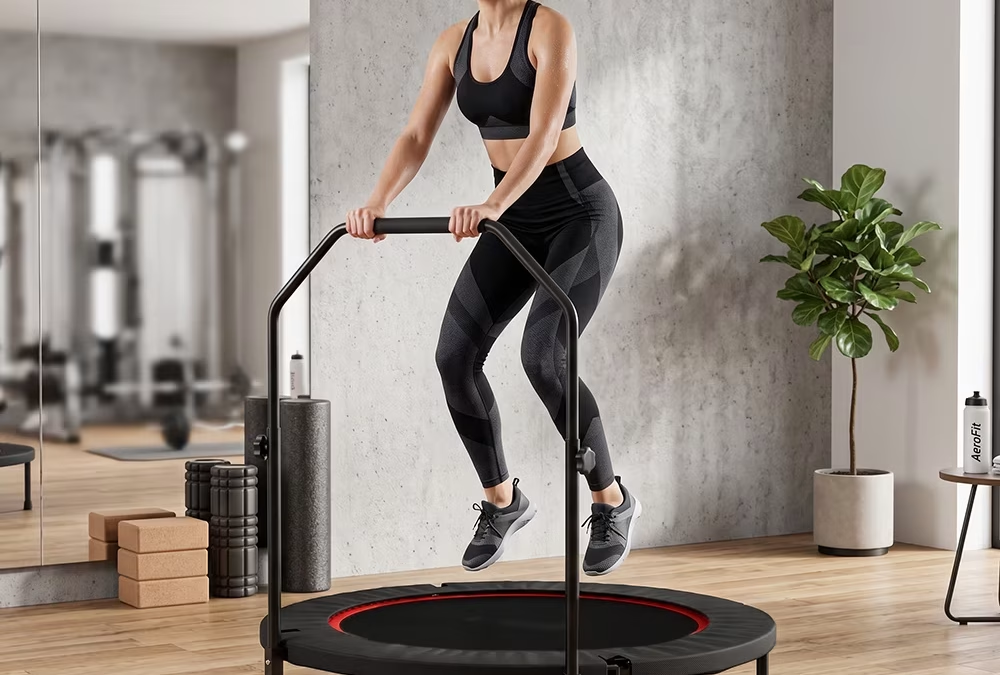

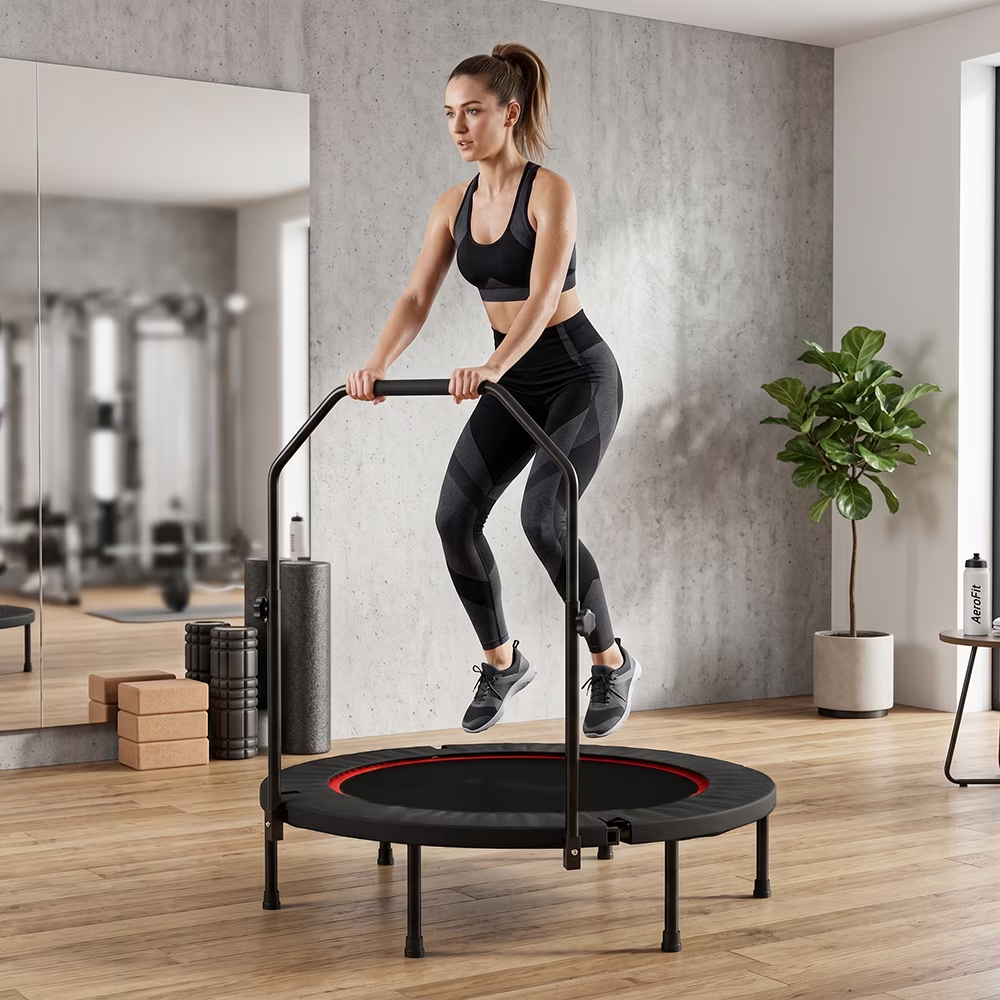
Hotel gyms are convenient, but their limited equipment and isolated environment can make every travel workout feel the same. A visitor searching for trampoline fitness Singapore experiences may prefer a coached rebound class that adds music, group energy and a movement skill not normally available beside the hotel treadmill. The class can become part of the city stay rather than another maintenance session performed in a generic room.
Novelty should still be planned intelligently. Travel alters sleep, walking volume, meal timing and hydration. The right place for trampoline fitness is not automatically the hardest available slot. It is the point in the itinerary where the traveller can learn the format, enjoy the experience and recover without disrupting the rest of the trip.
The Hotel Gym Solves Access but Not Engagement
A hotel gym removes travel time and uncertainty. For a short business stay, that may be exactly what is needed. The limitation appears when the room offers only a treadmill, a bike and a small dumbbell rack, or when the traveller has repeated the same workout across several destinations.
Repetition is not inherently poor training. Familiar movements are useful when performance needs to be maintained. However, a visitor who wants a distinctive urban fitness experience may value coaching and group structure more than another improvised circuit.
A trampoline class changes the training question. Instead of asking how to recreate the home programme with limited equipment, the traveller practises rebound timing, coordinated choreography and cardiovascular intervals in a purpose-built setting.
Place the Class After Basic Travel Recovery
Arriving from a long journey and booking the first available high-energy class can create an unnecessary challenge. Travel fatigue may involve poor sleep, prolonged sitting, dehydration and reduced concentration. Long-haul visitors may also be managing time-zone disruption.
The traveller does not need to wait until every sign of fatigue disappears, but the first session should not be used to prove that travel had no effect. A normal meal, regular hydration and at least one reasonable sleep opportunity can make the class more enjoyable and technically productive.
For a short regional trip, the main issue may be schedule congestion rather than jet lag. A class after several hours of meetings and extensive walking can still feel different from a normal training day. The itinerary should be treated as part of the workload.
Count Singapore Walking as Physical Load
Visitors may accumulate substantial steps while moving between attractions, shopping areas, transport stations and dining locations. Walking is lower intensity than a rebound class, but it still loads the feet and calves.
A traveller who has been standing and walking all day may arrive with lower-leg fatigue that affects landing control. This is not a reason to cancel automatically. It is a reason to begin with compact rebounds and avoid chasing height from the opening sequence.
Footwear can contribute to the problem. Shoes chosen for sightseeing may not be the pair the traveller prefers for a fitness class. Packing suitable training shoes and socks prevents the class from depending on whatever happens to be in the suitcase.
Choose the Class for Experience, Not Calorie Compensation
Travel meals are often richer or less predictable than meals at home. Using exercise to compensate for food turns the class into a penalty and can encourage excessive effort when the body is already managing travel fatigue.
A better objective is to create an active, memorable part of the trip. The traveller can enjoy local dining and still attend a structured workout without treating one as repayment for the other.
This mindset also improves pacing. The participant is more likely to listen to instructor cues, learn the equipment and select an appropriate movement range instead of trying to maximise a wearable calorie estimate.
A Coached Class Reduces Travel Workout Decisions
Travel already contains many logistical choices. A hotel workout may require the visitor to design a session around unfamiliar equipment and uncertain availability. A booked class provides a start time, sequence and instructor.
This can be especially valuable for business travellers. Once the class is on the calendar, the visitor can plan the end of the workday, the journey and dinner. The session has a defined duration instead of becoming an optional task that disappears after meetings.
The structure should not remove flexibility. If the traveller arrives tired or unfamiliar with rebounding, movement range can be scaled while still participating in the group format.
Location and Transit Belong in the Training Plan
The workout includes more than class time. Visitors should check the facility location, transport route, changing arrangements and how the session connects to the next activity.
TFX’s official trampoline fitness promotion lists xBounce at Millenia Walk. Travellers should verify the current schedule and availability before organising the itinerary, because class offerings and booking conditions can change.
A centrally planned session can fit between business or leisure activities. A poorly planned class may require rushing across the city, arriving late and beginning without time to settle. The travel experience improves when transit is treated as part of the appointment.
Learn the Surface Before Following the Room
Group energy can encourage a visitor to copy experienced participants. That is risky when the traveller is unfamiliar with the rebound surface and choreography.
The first few minutes should be used to understand mat response, foot placement and recovery options. A smaller bounce allows the participant to stay on rhythm without being pulled into movements they cannot yet control.
The traveller should also tell the instructor about relevant limitations and lack of rebound experience. This is not asking for special treatment. It gives the instructor information needed to provide an appropriate option.
Fit the Session Around Meals and Digestive Comfort
Singapore travel often includes food-focused plans. A large meal immediately before repeated bouncing may cause heaviness, even when the food is familiar. The class should not be squeezed between an extensive lunch and an early dinner without considering digestion.
A lighter, familiar meal with enough time before class is more practical. Visitors can enjoy richer or larger meals later, when repeated vertical movement is no longer imminent. Hydration should be spread across the day rather than consumed in a large amount at the studio entrance.
Travellers with food allergies, diabetes or other medical nutrition needs should follow their established plan and professional advice. A destination workout is not the time for aggressive dietary experimentation.
Use the Class as Variety Within a Wider Training Week
A visitor who already follows a structured programme should decide what the trampoline class replaces. It may serve as the week’s conditioning session, a coordination-focused class or an active social experience.
Adding it on top of every planned run and leg workout can create unnecessary lower-body fatigue. The class does not need to preserve every feature of the home programme. Its value may be the novel stimulus.
After returning home, the traveller can resume normal training without trying to reproduce the class independently. If the experience was enjoyable, it can inform future travel planning or class selection.
Recovery Determines the Best Place in the Itinerary
The day after class may already contain extensive walking or a flight. Travellers should consider how calf or thigh fatigue could affect those plans.
Booking the session immediately before an overnight flight may be inconvenient if there is little time to cool down, eat and change. Placing it before a lighter evening can make recovery more comfortable.
The class should enhance the stay rather than dominate it. A visitor can choose a moderate range, finish with stable technique and still receive the benefit of a distinctive coached workout.
Turn a Workout Into a Singapore Fitness Experience
Visitors can use TFX Singapore to access an organised training environment instead of relying exclusively on hotel equipment. The value lies in coaching, group rhythm and exposure to a format that may not be available at home.
The best travel session is not the one that produces the most exhaustion. It is the one that fits the itinerary, respects travel load and leaves the visitor glad they chose something different. When planned well, trampoline fitness becomes part of experiencing Singapore rather than a workout squeezed around it.
Frequently Asked Questions
Should I book trampoline fitness on my arrival day?
It depends on journey length, sleep, hydration and how you feel. After demanding travel, a later slot may provide a better learning and recovery experience.
Can the class replace my usual hotel cardio workout?
Yes, if it fits your programme and current recovery. Treat it as a distinct conditioning and coordination session rather than adding it automatically to every planned workout.
What should I bring?
Bring suitable training clothing, preferred exercise shoes, socks and water. Confirm facility-specific requirements before attending.
Is trampoline fitness appropriate before a full sightseeing day?
It can be, but account for potential calf and thigh fatigue. Use a moderate class range when the following day already contains substantial walking.
